Research Spotlight
The Geographical Imaginations Expedition & Institute (GIEI)
Kevin S. Fox, Director of GIEI
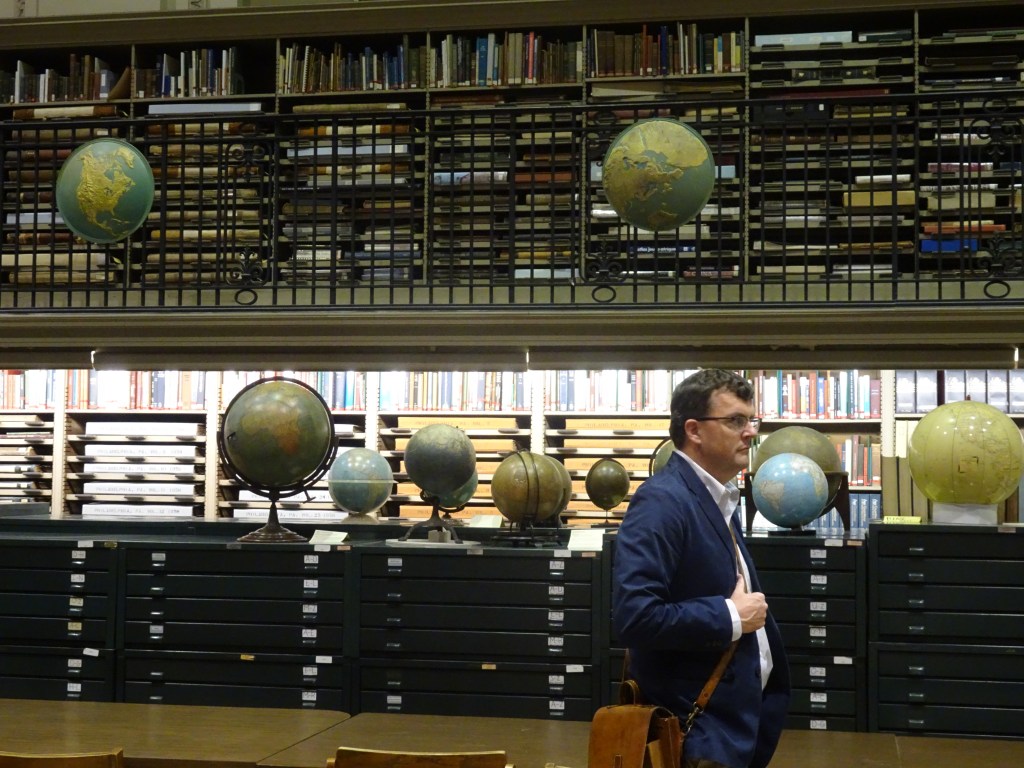
Kevin S. Fox established The Geographical Imaginations Expedition & Institute (GIEI) with the mission to bridge academic and everyday geographical thinking and challenge one-dimensional narratives of local and global communities. From 2014 to 2020, GIEI’s main project was “Geographical Imaginations: Radio Expeditions into the Geographies of Everything and Nothing,” a monthly radio essay program broadcast via Radio Fabrik in Salzburg, Austria. Over five years and 60 episodes, the program posed thought-provoking questions and explored themes through engaging discussions with diverse voices and texts. Each episode investigated the geographies of a certain topic, often focusing on Central European subjects. However, GIEI also ventured to far-off locations, producing radio essays in Tanzania, Zanzibar, Cuba, and the Arctic. Guests included Doreen Massey, Yi-Fu Tuan and Andy Merrifield. GIEI extended its mission to educational initiatives for Grades 6-12, including inquiry-based, project-based, and experiential learning programs. These programs include ASKing the World, ASKing the Arctic, World as Village: 100 People, TransAtlantic Cable, The Salzburg Geographical Expedition, and The Salzburg Rhythmanalysis Project. Based now in Spain, GIEI continues to expand geography education at the secondary school level, designing a 7-14 day Field Camp in northern Spain for high school human geography students and teachers. In 2024, GIEI will launch a creative writing journal to continue to foster a forum for works and ideas straddling the worlds of creative and geographical knowledge production.
For more information, visit: www.facebook.com/TheGIEI / www.geographicalimaginations.org
CUORE (Cultural of Responses): The Role of Culture in Wind Challenges
Ya-Qing Zhan, Research Associate, Institute of Geography at the University of Hamburg
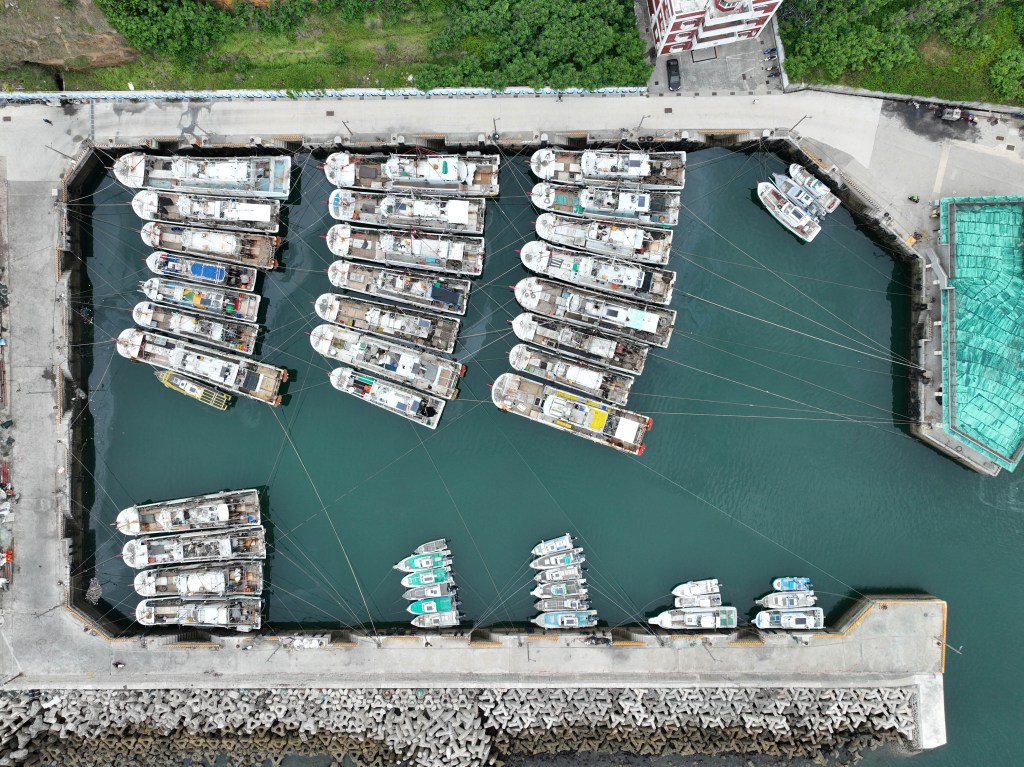
The resilience discourse cannot ignore the cultural perspective. Resilience stands as a promising and prospective concept in our current challenging world. Ya-Qing Zhan, a research associate at the Institute of Geography at the University of Hamburg, is engaged in researching cultural responses to wind resilience on the Penghu archipelago in Taiwan. This archipelago is often referred to as the wind islands due to the particular wind challenges posed by monsoons and typhoons. Ya-Qing’s research is part of CUORE research project. CUORE (Cultural of Responses) led by Prof. Beate Ratter and Dr. Corinna de Guttry, focuses on a comparative study between the German East Frisian Islands and the Taiwanese Penghu archipelago. This project aims to understand how culture shapes responses and adaptations to wind challenges. The attached photo depicts fishermen’s preparations for a typhoon on Penghu. The boats are tightly clustered together with ropes to enhance their collective ability to withstand the typhoon’s winds.
For more information, visit: University of Hamburg: Project CUORE – Culture of Responses / www.linkedin.com/in/ya-qing-zhan / ya-qing.zhan@uni-hamburg.de
The Spatiality of Digital Loneliness
Dr Shekh Moinuddin, Assistant Professor, Jamia Millia Islamia
Dr. Moinuddin’s research explores the spatial dimensions of the relationships between digital loneliness, social sustainability, and social interaction. He focuses on two questions:
- Whether digital loneliness is weakening the social sustainability in the society/spatiality?
For example, in the past, youngsters often asked their elders how to reach such a location and enquiry about the routes, if they wanted to visit such a place. However, nowadays google maps reduced such dependency upon elders and elders remain symbolic in the tangible world. There are many such episodes when younger people do not consult elders rather they rely more on technologies and digital gadgets than elders. How are digital gadgets widening such social crevasses? - Whether digital loneliness is minimizing the social interactions in the society/spatiality?
For example, in a home or office people often interact with each other on various issues. However, since the proliferation of smartphones people prefer smartphones for calling, messaging, or chatting over physical interactions. The selection of those places (digital loneliness) is often made on available criteria and cognitive imagination wherein users can feel safe for scrolling their smartphone. - Whether digital loneliness is producing a number of spatial, social and cultural spaces and places in digital and cognitive sense (seclusion, aloneness, isolation, segregation, inaccessibility, quarantine and separation) in daily digital experiences?
For more information follow on X (twitter) @shekhmoinuddin or email directly moinuddin3shekh@gmail.com
 Cultural Geography Specialty Group