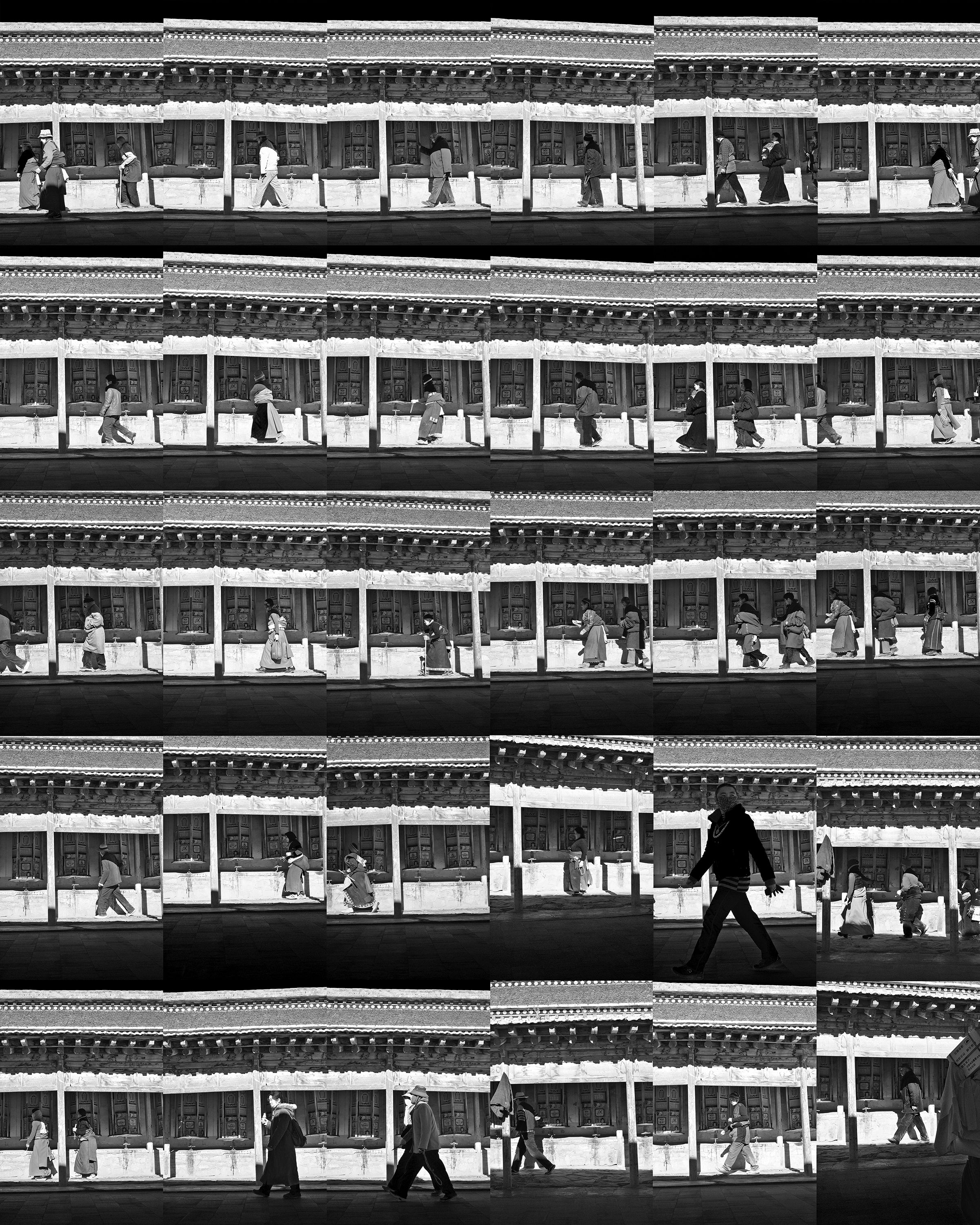
This composite image shows the materiality of encounters with a Tibetan Buddhist kora, or circumambulation circuit; a composite work conveys the intensity of the traffic the circuit landscape receives in a way that a single photograph could not do. Tibetan sacred sites often have multiple scales of kora that can surround around a single structure, a large monastic complex, or even a mountain. As devotees walk, they spin prayer wheels called mani khorlo. Each large vertical wheel is made of wood and has worn handles that are used to spin them. Inside the wheels are written prayers that, when put into motion, generate merit for all sentient beings. Material contact with the wheels and kora circuit is essential in these sacred encounters. Circumambulation circuits are also sites of social interaction. Family and friends gather from surrounding pastoral, farming, and urban communities to share gossip about kinsfolk, economic opportunities, and life changes. The kora are thus locales of social interaction that have historically been disrupted or tolerated by successive Chinese government.
Labrang Monastery, located in Gansu Province, China, is adjacent to a growing urban community, as well as part of a domestic tourism market that increasingly includes photographing these sites as a form of consumerist compulsion. This composite image also serves as a commentary on the photographer’s gaze as tourists and travelers enjoy appropriating images of Indigenous religious practice, which reinforces ideas of purity of devotion in a landscape perceived as remote and exotic.
 Cultural Geography Specialty Group